Why HVAC Commissioning Matters
HVAC systems are among the most complex and critical components of any building. They influence occupant comfort, indoor air quality, energy consumption, and overall facility performance. Even the most carefully designed systems can fail to operate as intended if installation quality, controls integration, and system functionality are not properly verified.
The HVAC commissioning process provides a structured quality assurance framework that helps verify HVAC systems perform according to design intent, owner requirements, and operational goals. Rather than waiting until occupancy to identify deficiencies, commissioning evaluates performance throughout the project lifecycle. This proactive approach helps reduce energy waste, improve occupant comfort, support indoor environmental quality, and lower long-term operating costs.
As buildings become increasingly sophisticated, commissioning has become an essential practice for owners seeking reliable performance, operational efficiency, and long-term value from their facilities.
What Is HVAC Commissioning?
HVAC commissioning is a systematic process used to verify that heating, ventilation, and air conditioning systems are designed, installed, tested, and operating correctly. It is not a one-time inspection performed at project completion. Instead, commissioning begins during planning and design and continues through construction, occupancy, and ongoing operations.
Key elements include:
- Verification of design intent
- Performance testing
- Documentation and training
- Ongoing optimization
The goal is to confirm that systems operate efficiently, reliably, and in accordance with owner expectations while supporting long-term building performance.
Phase 1: Planning & Pre-Design
Effective commissioning begins before design work starts.
Key Activities
- Define Owner’s Project Requirements (OPR)
- Establish performance goals
- Identify sustainability targets
- Determine commissioning scope
- Select commissioning team
During this phase, owners establish expectations for temperature and humidity control, ventilation rates, energy performance, and redundancy requirements for critical facilities. Early collaboration between owners, engineers, contractors, and commissioning providers helps align project objectives before major decisions are made.
Addressing potential issues at this stage is significantly less expensive than correcting them after construction. Early planning creates a clear roadmap that guides design and construction activities while reducing future risks.
Phase 2: Design Review & Coordination
Design review focuses on validating that the proposed HVAC design aligns with the OPR and supports operational goals.
Key Activities
- Review design documents
- Verify alignment with OPR
- Evaluate HVAC system selection
- Review control sequences
- Develop commissioning specifications
Commissioning professionals examine equipment sizing, airflow requirements, control strategies, energy performance, maintainability, and system integration. These reviews provide an independent assessment focused on functionality and long-term performance.
Identifying design conflicts before construction begins helps avoid costly field modifications and improves overall project quality. The commissioning team serves as an objective advocate for building performance throughout the design process.
Phase 3: Construction Verification
Once construction begins, commissioning efforts shift toward verifying that equipment and systems are installed correctly.
Key Activities
- Submittal review
- Site inspections
- Installation verification
- Equipment startup observation
- Deficiency tracking
Commissioning teams verify the installation of air handling units, chillers, boilers, pumps, ductwork, controls, and sensors. Site inspections confirm that systems match design documents and manufacturer requirements.
Deficiencies are documented and tracked through resolution before systems advance to testing. This process improves quality control, supports schedule adherence, and helps prevent operational issues after occupancy.
Phase 4: Pre-Functional Testing
Pre-functional testing evaluates individual components before integrated system testing begins.
Key Activities
- Equipment startup verification
- Sensor calibration checks
- Damper verification
- Valve operation testing
- Controls validation
Testing may include confirming fan rotation direction, verifying actuator movement, checking sensor accuracy, and validating control point functionality.
This phase establishes confidence that individual components are operating properly before evaluating entire systems. Resolving issues at this stage helps improve the effectiveness and efficiency of subsequent testing activities.
Phase 5: Functional Performance Testing
Functional testing is often considered the centerpiece of HVAC commissioning because it evaluates how systems operate under actual conditions.
Key Activities
- Sequence of operations testing
- System integration verification
- Load testing
- Alarm testing
- Emergency mode testing
Commissioning teams test heating and cooling operation, occupied and unoccupied schedules, alarm responses, demand-control ventilation, and emergency shutdown procedures.
The purpose of HVAC system commissioning is to verify that all components work together as intended. Rather than simply confirming individual equipment functionality, functional testing demonstrates that the entire HVAC system responds correctly to real-world operating conditions.
Phase 6: Documentation & Training
Successful commissioning extends beyond testing.
Key Activities
- Systems manuals
- Operations documentation
- Staff training
- Maintenance procedures
Comprehensive documentation provides facility teams with valuable resources for operating and maintaining building systems. Operations manuals, troubleshooting guidance, and maintenance procedures support long-term performance.
Training ensures operators understand system functionality and can effectively respond to changing building conditions. Well-informed facility personnel play a critical role in maintaining performance after project turnover.
Phase 7: Occupancy & Ongoing Optimization
Building systems often perform differently once occupants begin using the facility.
Key Activities
- Seasonal testing
- Warranty reviews
- Performance monitoring
- Issue resolution
- Recommissioning planning
Occupancy-phase commissioning may include seasonal verification, energy performance reviews, control adjustments, and occupant comfort assessments. These activities help identify opportunities for further optimization.
Common HVAC Commissioning Challenges
Commissioning frequently identifies issues that could negatively affect building performance if left unresolved. Common examples include improper control sequences, incorrect sensor calibration, airflow imbalances, equipment installation errors, documentation gaps, and communication failures between systems.
Without commissioning, these problems may remain hidden until they affect occupants or building operations. Early identification and correction help reduce risk, improve reliability, and support long-term performance.
How Cornerstone Commissioning Approaches HVAC Commissioning
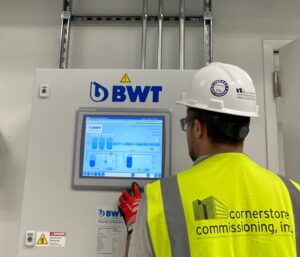
Cornerstone Commissioning supports projects throughout the building lifecycle through independent verification, detailed testing, and hands-on expertise. Our team becomes involved early in the design process to help establish performance goals, identify risks, and support informed decision-making.
With experience supporting healthcare facilities, laboratories, higher education campuses, commercial buildings, and mission-critical environments, Cornerstone understands how HVAC performance affects safety, energy consumption, occupant comfort, and operational reliability. Our hands-on approach allows us to identify issues early and help owners make informed decisions throughout the project lifecycle.
For projects involving air handling systems, our expertise in AHU commissioning helps verify equipment performance and controls integration. We also support broader HVAC system evaluations that help owners achieve reliable, efficient operation.
Commissioning Is Essential to Long-Term HVAC Performance
HVAC commissioning is an investment in long-term building performance. From planning and design review through construction verification, testing, training, and ongoing optimization, each phase helps verify that systems operate according to owner requirements and design intent.
At Cornerstone Commissioning, we apply a hands-on approach to HVAC commissioning that helps owners reduce risk, improve operational efficiency, and verify reliable performance throughout the building lifecycle. As building systems become increasingly complex, commissioning remains a critical tool for delivering high-performance facilities that meet operational goals today and into the future.