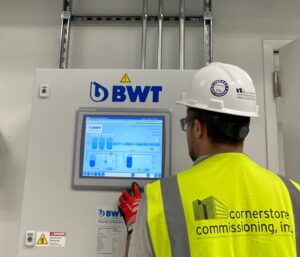

Why Building Commissioning Matters
Many buildings do not operate the way they were originally designed. Even with detailed plans and experienced contractors, gaps between design intent and real-world performance are common. Systems may be installed correctly but still fail to function as expected once the building is occupied.
This is where building commissioning plays a critical role. Commissioning is a structured quality assurance and performance verification process that confirms systems operate according to the owner’s requirements. As buildings become more complex and energy costs continue to rise, commissioning has become essential for achieving sustainability goals and maintaining long-term performance.
What Is Building Commissioning?
At its core, building commissioning is a process that verifies building systems, such as HVAC, electrical, plumbing, and controls, are designed, installed, tested, and operating as intended. It aligns system performance with owner expectations and project goals.
The commissioning process applies to both new and existing facilities. It supports new construction and extends to existing building commissioning, helping facilities maintain performance through long-term operational strategies.
1. Improved Energy Efficiency & Lower Operating Costs
One of the most immediate and measurable benefits of commissioning is improved efficiency. Buildings often consume more energy than necessary due to misconfigured systems, improper sequencing, or overlooked design issues.
Commissioning identifies these inefficiencies and corrects them. For example, airflow imbalances, improperly calibrated controls, or simultaneous heating and cooling can significantly increase energy consumption. By addressing these issues, commissioning reduces utility costs and supports long-term operational savings.
2. Better System Performance & Reliability
Commissioning focuses on verifying that systems function as designed. Through detailed testing and validation, the commissioning team evaluates how systems operate under real conditions, not just how they are expected to perform on paper.
This approach improves reliability across the building. Systems are fine-tuned during commissioning activities, which reduces unexpected failures and supports consistent operation. When systems work together properly, the entire facility benefits from improved performance and fewer disruptions.
3. Reduced Risk & Fewer Costly Issues
Commissioning is also a powerful risk management strategy. Identifying issues early in a construction project prevents costly rework, delays, and operational challenges after occupancy.
Without commissioning, many problems go unnoticed until they become expensive repairs or impact building operations. By addressing issues before they escalate, commissioning protects the schedule and the budget of the project while reducing long-term risk for owners and operators.
4. Improved Occupant Comfort & Indoor Air Quality
A building’s performance directly affects the people who use it. Commissioning helps create more comfortable environments by verifying that HVAC systems maintain consistent temperatures, proper ventilation, and balanced airflow.
These improvements also enhance indoor air quality, which is critical in environments such as offices, laboratories, and healthcare facilities. Properly functioning systems contribute to healthier spaces and more productive occupants, reinforcing the value of commissioning beyond energy savings alone.
5. Extended Equipment Lifespan
When systems are optimized during commissioning, they operate more efficiently and experience less wear and tear. This directly impacts the lifespan of critical equipment, reducing the need for premature replacement.
By correcting issues such as improper cycling, overuse, or misaligned controls, commissioning helps extend system life and lower maintenance costs. Over time, these savings add up, making commissioning a practical investment in long-term asset performance.
6. Compliance, Documentation & Training
Commissioning supports compliance with building codes, sustainability standards, and performance requirements. It also provides detailed documentation that outlines how systems are designed to operate and how they were tested.
In addition to documentation, commissioning includes training for facility teams. This ensures that operators understand system functionality and can maintain performance after the project is complete. For owners of commercial buildings, these deliverables provide clarity, accountability, and a strong foundation for ongoing operations.
7. Long-Term Building Performance & Optimization
Buildings do not remain static after occupancy. Over time, system performance can drift due to changes in usage, maintenance practices, or control settings.
This is why continuous commissioning has become an important part of long-term building strategy. By monitoring system performance and identifying trends, ongoing commissioning helps maintain optimal performance well beyond the initial project phase.
Rather than treating commissioning as a one-time event, forward-thinking organizations use it as a tool for continuous improvement and operational optimization.
When Should You Commission a Building?
The best time to begin commissioning is during the early design phase of a project. Early involvement allows the commissioning provider to influence system design, identify potential issues, and align performance expectations before construction begins.
However, commissioning can also be applied during construction or after occupancy. Existing buildings often benefit from commissioning services when performance issues arise, energy costs increase, or renovations take place. Regardless of timing, earlier engagement typically leads to better outcomes and a stronger return on investment.
Who Benefits from Building Commissioning?
The benefits of commissioning extend across multiple stakeholders.
- Building owners gain reduced operating costs and improved asset value.
- Facility managers benefit from easier system operation and clearer documentation.
- Occupants experience improved comfort and indoor air quality.
- Developers and project teams achieve higher quality outcomes and fewer post-construction issues.
Commissioning creates value at every level by aligning system performance with real-world needs.
Commissioning Is an Investment, Not a Cost
Professional commissioning delivers measurable value across the entire lifecycle of a building. From lower energy bills and reduced maintenance costs to improved reliability and occupant comfort, the return on investment is clear.
Rather than viewing commissioning as an added expense, building owners increasingly recognize it as a critical step in achieving high-performance facilities. It is a proactive approach that prevents problems, improves outcomes, and supports long-term success.
Work With an Experienced Commissioning Provider
If you are planning a new project or looking to improve an existing facility, working with an experienced commissioning provider can make a meaningful difference.
Cornerstone Commissioning brings decades of experience supporting complex, high-performance facilities. Our team works closely with owners and project stakeholders to deliver practical solutions, verify system performance, and support long-term operational success.
Contact Cornerstone Commissioning today to discuss your project and learn how commissioning can help you achieve better building performance.